 Nutaan CRM
1. Shift from mass emailing to a Customer-Centric approach
A definitive Email Marketing Trend for 2026 is the shift away from mass/emailing of the same content to hundreds/thousands of unsegmented and alike customers (inserted as part of the recipient data structure). In the past, customers would respond to bulk emailing campaigns that would go out to a mass population of customers; however, because of this trend, the customer now engages with an email even if it is written just for them and structured around who they are, what they need, and what point of their journey they are in (and where they are at any given time).
Marketing email communications involve using data collected through CRM systems (customer relationship management systems) to understand customers beyond just their demographic profile. By sending emails triggered from the customer's intent to purchase, rather than what works best for your promotional schedule, you make your emails feel much more like conversations vs. promotional messages. As a result, open rates, click-through rates, and overall brand perception improve significantly.
2. Personalized Email Campaigns Defined by Relevance vs. Gimmicks
In 2026, personalized email campaigns will not contain just the name of the recipient as a means of capturing their attention. Instead, they will be based on relevant information obtained from various sources of CRM data (such as purchase history, feature usage, browsing history, engagement history, and lifecycle stage) and will have dynamically generated content tailored to the individual.
As an example of advanced personalization, email's subject line, tone of messaging, placement of call-to-action buttons, and timing of sends can be customizable based on customer data. For example, a new user may receive emails that include how to use the product while an existing user who has been using that same product for a long time may receive emails that include how to optimize use of the product as well as suggestions for other products to purchase. When personalized content is derived from actual and accurate customer data, customers will engage naturally and value-oriented as opposed to feeling forced.
3. Manual Campaigns Should Be Replaced with Automated Email Marketing Workflows
Manual email campaigns are inefficient, prone to errors, and impossible to scale. By 2026, every successful email marketing strategy will utilize automated email workflows as the foundation.
Manual email campaigns are inefficient, prone to errors, and impossible to scale. By 2026, every successful email marketing strategy will utilize automated email workflows as the foundation.nThe use of automation allows for consistency of messaging, as marketers have the ability to concentrate on strategy rather than executing repeatedly. Automated workflows will manage the following types of communication: onboarding sequences, lead nurturing emails, follow-up emails, re-engagement emails, renewal reminders, and post-purchase communications. These workflows are triggered by the actions of the customer or changes in their life cycle. This guarantees that the email sent is the most relevant to that particular moment. When created correctly, automation does not impair personalization; it actually enhances it.
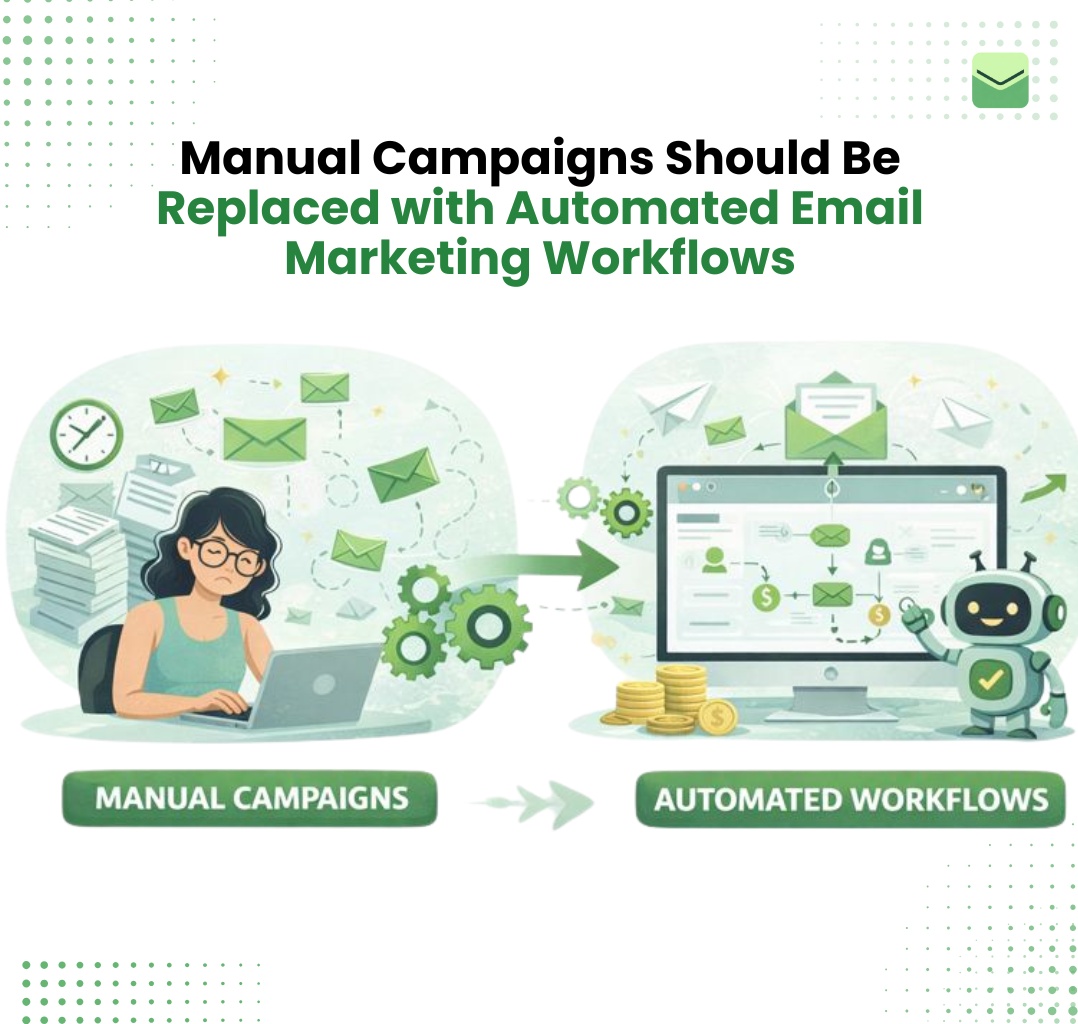
Manual email campaigns slow teams down. Automated workflows scale engagement, revenue, and consistency
4. Develop Emails Based on the Email Lifecycle Marketing
Lifecycle marketing via email has shifted from being a supplemental strategy to being a key strategy for engaging with customers. All customers move through stages of a predictable life cycle, and each of those stages requires a unique communication strategy. Many companies do not treat customers similarly based on where they are in their journey with the company, and this creates consumer disengagement and a subsequent loss of customers.
By 2026, effective email marketing will map the specific communication to each phase of lifecycle marketing: awareness, onboarding, activation, growth, retention, and re-engagement. CRM systems assist marketers in managing how their customers move through the lifecycle and trigger the appropriate email workflows. By using a structured approach, marketers can provide their customers with guidance in each phase of the lifecycle as well as provide the customer with value, thus developing greater long-term relationships.
5. Unify Email Strategy Through the Use of CRM Marketing Automation
CRM marketing automation has dramatically changed the way companies manage email marketing. Rather than companies using separate or disparate tools to manage email engagements, most modern marketing departments now have email embedded inside their CRM systems. Utilizing centralisation of data allows for accurate data, consistent messaging and a single view of the customer.
When email automation uses CRM's primary source of data to segment contacts, the segmentation becomes much tighter; workflows become more intelligent; and reporters have meaningfulness. Marketers are able to look at how their emails have impacted not only opens and clicks; but also conversions, retention and lifetime value of a customer — providing an ability to continuously optimise and confidently make decisions.
6. Use Behavioural Triggers to Capture Intent
Behavioural emails outperform the traditional scheduled email campaign in that they are based on customer intent. In 2026, behavioural triggers will be one of the primary ways customer engagements is driven. Emails are to be sent once a specific action by the customer occurs (e.g. signing up, abandoning a feature, returning to a pricing page, remaining inactive for a defined period).
Behaviour-based emails provide timely, context-aware communication and will be perceived as helpful rather than intrusive. With the integration of CRM's ability to track this kind of behaviour, emails will be triggered in real time. The end result will be increased engagement, improved conversion rates and greater customer trust.
7. Optimise Send Times with Engagement Intelligence
Historically, send time optimisation has only been done using best practices. However, in 2022, this has become a more data-driven process. Modern email platforms are able to use each individual's engagement activity to determine what time of day will yield the highest likelihood of the user opening and interacting with emails.
Marketers can use CRM systems to analyze how often customers have corresponded with them and determine when is the best time to send emails. By sending emails at the right time, a company's email marketing sends out higher-quality engagements than just sending out emails based on gut feeling or traditional industry average types of metrics.
8. Provide Simple Email Content While Still Delivering Value.
In 2026, email content that delivers the most value carries a short, appropriate, and clear message. As we know, most customers do not want to spend their time searching through long, cluttered emails that may contain multiple competing messages. Exceptional email campaigns include one meaningful message, and each campaign is written to guide the email reader toward one action.
Through the use of CRM user data, brands can understand what email message will be most relevant to the recipient and tailor their email messages to each customer. Customers will receive targeted value in each email they receive from the business, depending upon the type of communication being made, whether it is a tip for a product, an update to the features of a product, a piece of educational information, or a reminder to the customer of the next time the product is available to them. Businesses that provide simple email communications have reduced cognitive load, which increases the number of times the user engages with email content over time.
9. Measure Engagement Based on Business-Centric Metrics
Traditional email metrics, such as the open rate and click-through rate, provide limited insight into the impact of email marketing on a business. By 2026, marketing teams will measure email engagement based on the outcome of emails, such as feature adoption, repeat use of the feature, conversions, and retention of customers.
Using CRM marketing automation, marketers will be able to connect customer activity with revenue metrics. This allows marketers to evaluate emails sent through automated email marketing systems. Email Marketers Use Engagement Metrics to Improve Email Strategies Teams can develop effective email strategies by focusing on meaningful engagement metrics.
10. Email marketing is just one piece of the integrated engagement ecosystem.
Email marketing is no longer a stand-alone feature. It should be part of an integrated system that also includes in-app messaging, CRM alerts/notifications and customer success outreach in addition to sales and marketing communication. An integrated approach enables a consistent message across all touch points. By harmonizing with other communications channels, email provides a cohesive experience as opposed to a fragmented messaging experience. CRM platforms provide one common point of reference regarding each of these interactions which builds trust, establishes brand credibility, and creates long-term engagement.
Why These Email Marketing Ideas are Valuable For 2026
The common theme among the email marketing ideas for 2026 is intelligence. Email marketing trends have changed by 2026; strategies will now be based upon data analysis, automation and information about the customer. Personalized email marketing is successful because it relates to the actual customer need. Automated email marketing is successful because it provides a high level of consistency at a very large scale. Lifecycle email marketing is successful because it aligns with the company's standard customer journey. CRM marketing automation enables companies to have data accuracy, visibility and control with respect to their overall engagement. These companies are no longer just reactive email marketers; they are engaged in developing proactive engagement systems that will develop with the evolution of their customers.
By harmonizing with other communications channels, email provides a cohesive experience as opposed to a fragmented messaging experience. CRM platforms provide one common point of reference regarding each of these interactions which builds trust, establishes brand credibility, and creates long-term engagement.
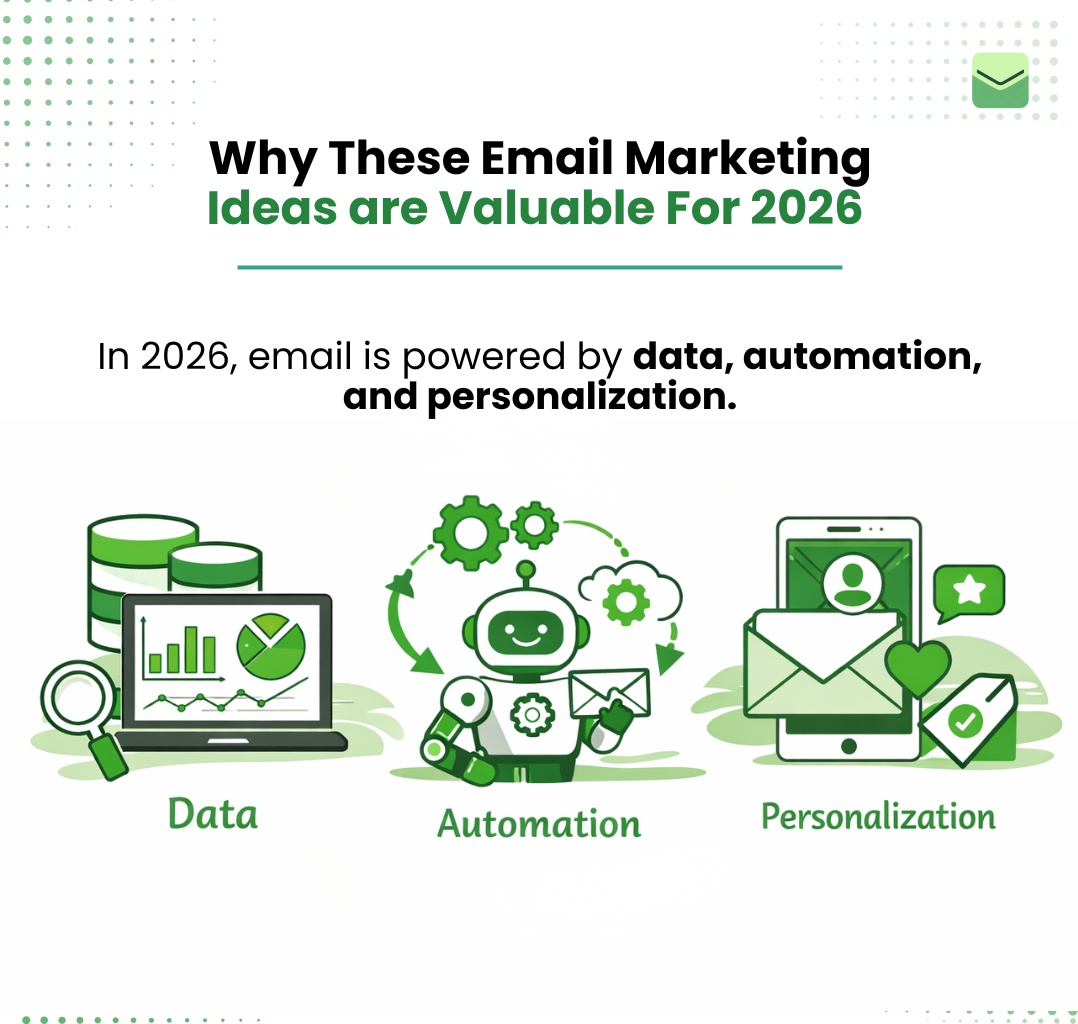
The future of email marketing is smarter, faster, and more personal. Data, automation, and personalization lead the way in 2026
In 2026, email marketing is still one of the most powerful ways to engage with your audience—but only for businesses that are willing to evolve. The brands that will win in the future will be the ones that treat email as a strategic, data-driven relationship building tool, rather than just a broadcast medium.
Businesses can create email experiences that customers look forward to receiving by embracing personalized email campaigns, automated email marketing workflows, lifecycle email marketing, and CRM marketing automation. For companies using AI-first platforms such as Nutaan CRM, these ideas are not aspirational; instead, they are viable, scalable methods for generating sustained engagement and growth.
Frequently Asked Questions (FAQs)
1. What Are the Most Important Email Marketing Trends In 2026?
The most important email marketing trends in 2026 are CRM led personalization; Automated Email Marketing Workflows; Lifecycle Email Marketing; Behavior-Based Triggers; and AI Driven Engagement Insights. Businesses moving away from traditional mass campaigns to create data-driven, customer-centric Email Strategies with a focus on relevance and timing over total volume.
2. Why Are Personalized Email Campaigns More Effective Than Generic Emails?
Personalized Email Campaigns are more effective because they utilize real customer data to create campaigns based on customer behavior, customer preferences, and customer lifecycle stages. instead of sending the same message out to everyone, personalization allows each recipient to receive content that matches their exact needs.
3. How can the use of automated email marketing tools enhance the ability of your business to engage with customers?
Automated email marketing tools enhance customer engagement by automating the delivery of relevant and timely email communication while reducing the need for any manual intervention. Automated email marketing tools send emails out based upon customer behavior (e.g., signing up for email lists, inactivity, or using certain features). Because the emails are being sent to customers at specific points in time after they have displayed certain behaviors, the likelihood of them engaging with the email content and converting to sales will increase significantly.
4. What are Lifecycle Email Marketing and Why Do I Care About This Process?
Lifecycle Email Marketing is the process of sending emails based upon where a customer is in their customer lifecycle. The process of Customer Relationship Management (CRM) will help you to identify where each customer is within the lifecycle process so that you can create relevant communication for each level of the customer lifecycle, whether the customer is being onboarded, retained or reengaged. Using the CRM process will help you avoid sending duplicate emails to customers and send them well-targeted, relevant emails which will establish a long term relationship with the customer.
5. In what ways does CRM Marketing Automation improve Email Marketing Results?
CRM Marketing Automation brings together customer data, customer segmentation and email marketing processes all in one system which enables marketers to use data to create more effective marketing automation processes, to track how customers are engaging with their email marketing, and to better align their email marketing communication with customer behavior, leading to improved targeting of customers and ultimately better business results.
Utilize Nutaan CRM to Create an Engagement-Driven Strategy So You Can Experience Growth !
How about continuing to develop personalized and automated lifecycle email campaigns using the intelligence built into your customer relationship management (CRM) system?
Explore Nutaan CRM for helping you lead to hyper-engaged customers in 2026 !